Ola , amigos . Continuando a mesma ideia do HT Forum , estou recriando o clube dos toca discos Linn . Todos eles . Linn Basik ,
Linn Axis e LP 12 . 


Ola , amigos . Continuando a mesma ideia do HT Forum , estou recriando o clube dos toca discos Linn . Todos eles . Linn Basik ,
Linn Axis e LP 12 .
Umas fotos do meu Linn Axis MKII :


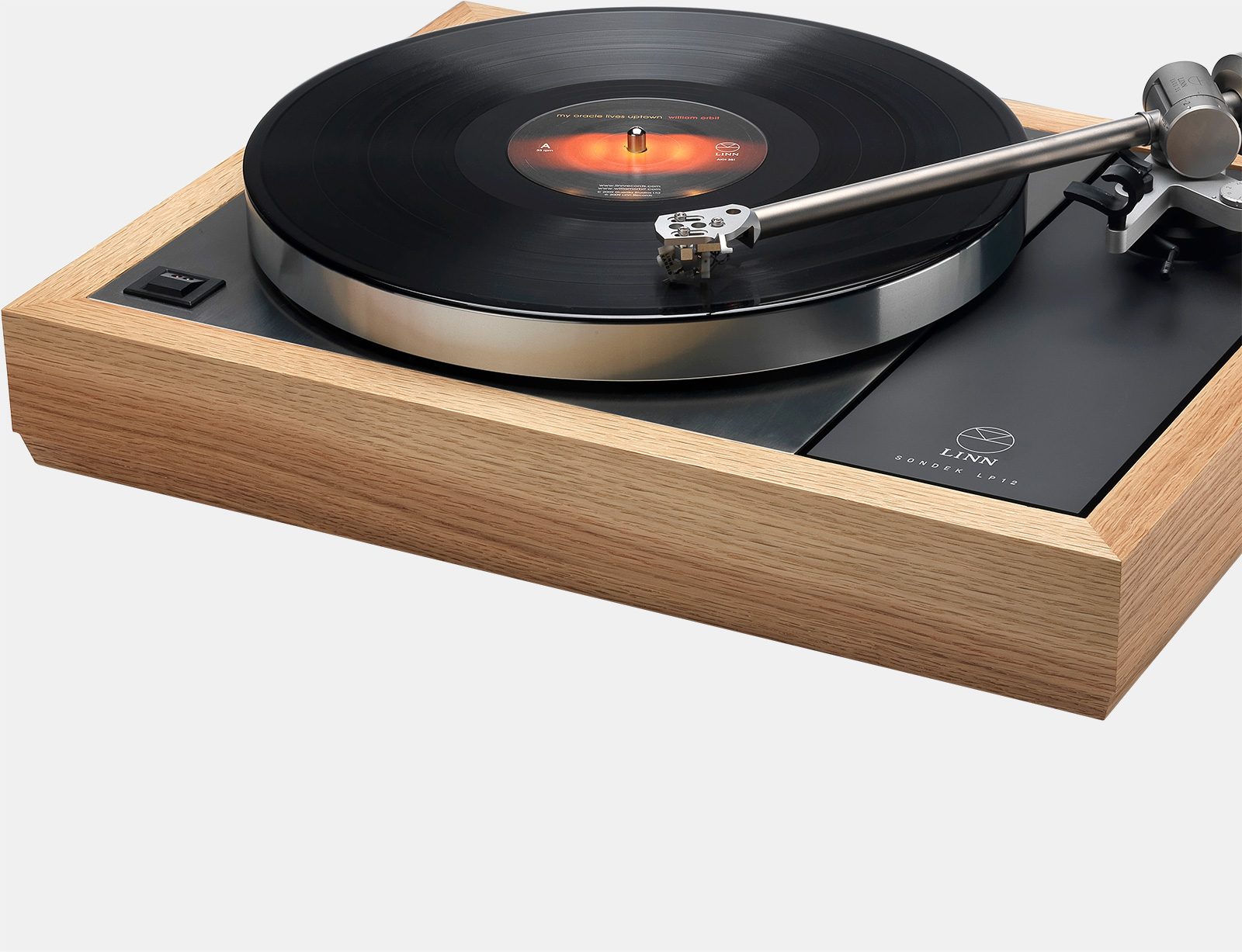
A história do toca-discos Linn Sondek LP12, segundo o site (tradução de minha autoria):
Como o desejo de um homem por um som melhor se tornou uma busca de quarenta anos para resolver um dos desafios mais complexos da engenharia: a reprodução precisa da música.
Belo Isolamento
Em 1973, Ivor Tiefenbrun tinha muitos motivos para ser feliz. Ele tinha acabado de se casar com o amor de sua vida e comprou algo com que sempre sonhou: o sistema de alta fidelidade definitivo. De acordo com a lenda da família, o aparelho de som era uma prioridade mais alta do que móveis para o lar conjugal.
Mas algo estava errado. O hi-fi era de última geração, mas para Ivor não soava tão bem quanto o hi-fi que ele ouvia na casa dos pais. Sendo engenheiro, ele tentou descobrir o porquê.
Na época, todos que conheciam áudio sabiam que as caixas de som eram tudo. Se você comprou caixas de som maiores e melhores, terá um som maior e melhor.
Ivor descobriu que todo mundo estava errado.
Ele experimentou com as caixas de som, mas nada melhorou o som até que ele mudou o toca-discos para outra sala, passando os cabos dele por baixo da porta fechada. A música era mais clara, mais precisa, mais envolvente. Melhor.
Este foi o momento de “Eureka!” De Ivor: ele provou que a saída das caixas de som estava sendo realimentada pelo toca-discos, danificando o sinal da fonte.
O que Ivor descobriu com seu hi-fi definiu a empresa que fundou desde então: quanto mais informações musicais você recuperar da fonte, melhor será o som. Qualquer informação musical perdida desaparece para sempre, não importa quão bom seja o resto do seu sistema.
Nasce Uma Lenda
Identificar o problema não foi suficiente para Ivor. Ele queria resolver isso.
A resposta de Ivor foi repensar o toca-discos.
Seu toca-discos parecia com muitos outros toca-discos da época, mas o que fazia era completamente diferente. Enquanto outros toca-discos foram projetados apenas para serem à prova de choque, Ivor projetou seu toca-discos para ser imune ao feedback acústico, de modo que pudesse obter o máximo possível de informações do groove do disco.
Ele começou projetando um rolamento central excepcionalmente silencioso, que seu pai o ajudou a fazer a engenharia de precisão com padrões incrivelmente altos para fornecer velocidade contínua e livre de atrito. A combinação do novo rolamento e o isolamento acústico do toca-discos garantiu que extraísse a quantidade máxima de informações do disco.
Ivor provou que seu toca-discos pode melhorar o som de qualquer sistema hi-fi. Ele o chamou de Sondek LP12.
O som aprimorado não foi a única inovação. O Sondek LP12 também foi projetado de forma modular para que pudesse ser atualizado. Ivor sabia que a tecnologia iria melhorar e queria que seu toca-discos e as pessoas que o compraram se beneficiassem dessas melhorias nos anos vindouros. Isso fez duas coisas. Em primeiro lugar, atraiu engenheiros para a Linn que compartilhavam a paixão de Ivor por um som melhor. E, em segundo lugar, criou uma fidelidade incrível do cliente. Isso porque cada pessoa que comprou um Sondek LP12 de 1973 em diante foi capaz de atualizar totalmente seu produto com as especificações mais recentes.
Não deveria ser nenhuma surpresa, então, que em 2016, a What Hi-Fi chamou o Sondek LP12 um dos produtos mais importantes dos últimos 40 anos e “indiscutivelmente o toca-discos high-end mais popular de todos os tempos”. Hi-Fi Choice afirma que é “o componente de alta fidelidade mais importante já vendido no Reino Unido”. Stereophile o chama de “um clássico, um revolucionário, um iconoclasta, um sobrevivente”.
E ainda estamos encontrando maneiras de melhorá-lo ( https://www.linn.co.uk/about/our-story ?.
Tornando as Coisas Melhores
O Sondek LP12 foi um sucesso, mas o próximo desafio de Ivor era entregar o produto em quantidade. De acordo com a sabedoria convencional, uma linha de produção era a maneira mais eficiente de fabricar, então Ivor começou a colocar uma na Linn. No entanto, simplesmente não estava entregando a qualidade ou os números que ele e o exército de clientes em rápido crescimento da Linn exigiam.
Deve haver uma maneira melhor, Ivor pensou. Então, ele reuniu sua equipe para tentar identificar o que poderia ser e pediu um toca-discos completo para que todos pudessem compartilhar suas ideias sobre ela. Esperando uma longa espera, Ivor ficou surpreso quando o responsável pela produção voltou logo depois com um Sondek LP12 completo.
“Como o construímos tão rapidamente?” ele perguntou.
“Eu mesma construí,” ela respondeu.
Ivor estava pasmo. O toca-discos foi feito à mão, do zero, em tempo recorde. Por uma pessoa. Foi perfeito.
“Não precisamos mais ter essa reunião”, anunciou Ivor ao grupo. “Nós temos nossa resposta.”
Não pela primeira vez, Ivor descobriu que a sabedoria convencional estava errada. Se Linn pudesse fornecer a um indivíduo habilidoso tudo de que ele precisava, quando necessário - matérias-primas, ferramentas e equipamentos de teste - então essa pessoa poderia construir um toca-discos inteiro mais rapidamente e com um padrão mais alto do que uma linha de produção.
Essa pessoa pode assumir a propriedade total do resultado, assinar seu nome no produto acabado e ter o orgulho pessoal como o critério de qualidade que define.
Ele a chamou de Construção de estágio único e está no centro de nossos negócios desde então. Ivor até projetou nossa fábrica especialmente construída em torno disso.
Cada produto Linn é feito à mão nos arredores de Glasgow e assinado pela pessoa que o constrói.
Edmar
[QUOTE username=edmararj userid=7347348 postid=1312665889]A história do toca-discos Linn Sondek LP12, segundo o site (tradução de minha autoria):
Como o desejo de um homem por um som melhor se tornou uma busca de quarenta anos para resolver um dos desafios mais complexos da engenharia: a reprodução precisa da música.
Cada produto Linn é feito à mão nos arredores de Glasgow e assinado pela pessoa que o constrói.
Edmar[/QUOTE]
Grande Edmar
Muito obrigado pela sua postagem , enriquecendo em muito o clube Linn . Parabens !!! 

A visit to Linn to hear the new Klimax Exakt system, and the 40th Anniversary LP12 turntable in an all-digital system
Quiet night in Glasgow last Tuesday: thanks to the small matter of a football match (don’t ask), the city’s bars and restaurant seemed strangely empty, at least until the game was over, and then small knots of disconsolate green-and-white-scarfed fans could be seen trudging through the rain.
Our taxi driver was philosophical when a road closure diverted him: ‘It’ll be a stabbing,’ he deadpanned, adding ‘There’s always some numpties when there’s a match.’
The next morning at Linn’s factory in Waterfoot, set amidst a park to the south of the city, there were things to celebrate: not only has the company just marked its 40th anniversary with the launch of a very special version of its famous LP12 turntable, it’s also just starting to ship what’s probably its most adventurous product to date.
Well, at least since it decided to stop making CD players and concentrate on streamed and ripped digital music, anyway.

The Limited Edition Sondek LP12 is a fully-loaded version of the company’s founding product, complete with the latest Kandid cartridge mounted in an Ekos SE tonearm, sitting on the Keel sub-chassis/armboard assembly, and with the Radikal motor/power supply and Urika phono stage.
 But what sets the 40 Limited Edition turntables apart from a normal full-spec LP12 Sondek is a plinth made from wood previously used in whisky casks by the Highland Park distillery in Orkney.
The wood, which can be up to 100 years old – that’s life in service, not including how long the oak took to grow! – has been dried, bead-blasted and then oiled to achieve its finish.
The drying was needed because the wood the Linn factory received was too wet for immediate use, and more to the point too wet with whisky, which meant it was rather too redolent of its former life even for this application!

However, no attempt was made to smooth away marks on the wood such as those made in making the casks, such as nail holes and the like, and scuffs and dents it suffered in up to a century of use.
As Linn says ‘If we did that, it’d just be another piece of oak’.
The turntable comes complete with a bottle of 40-year-old Highland Park, itself rumoured to be worth £1000 or so, and the whole package is around the £25,000 mark.
That sounds like a lot of money until you consider that a full-specification standard Sondek LP12 is nearer £20,000 than £10,000 these days – although LP12 ownership starts at nearer £2000 –, and that apparently all 40 turntables have been snapped up by Linn’s network of retailers and distributors, ready for sale to their customers.
However, that celebratory and very exclusive LP12 isn’t the only story from the company’s first product, which originally appeared in 1972: development work continues, and the latest addition to the family is the Kore sub-chassis/armboard assembly.
This is designed to improve on the rigidity of the unit fitted to the basic Majik LP12 (itself now fitted with an improved assembly as standard), but without going all the way to the upmarket Keel fitted in the flagship versions.

Using a combination of folded box-section aluminium and a machined armboard made from a single billet in the Linn factory – there’s not much the company buys in! – the Kore is just part of the upgrade path the company offers, enabling the buyer to upgrade an original turntable to current specification, or indeed start with the current entry-level version and gradually build up to the top-end model

It’s encouraging that Linn isn’t merely still hand-building the LP12 at its factory, but also making its components and continuing to improve those parts as it goes.
And that’s doubly impressive when you consider all the ‘abandoning the past’ hoo-hah there was when it stopped making CD players – though it was far from abandoning anything apart from physical disc players – not to mention what it’s also doing now.

A tour round the production areas reveals that it’s very much business as usual at Linn: circuitboards are being populated rather than bought in as completed assemblies, and the metalwork is folded and finished in-house.
Even the printing of the legends on fascias and rear panels is done here, using the machine below.


Products are still built up from a kit of parts by a single person (above), rather than running down a production line, whether they be an LP12 or one of the company’s DSM streamers, and at every workstation automated test-jigs stand ready to check all the functions of the completed products.


There’s even a separate climate-controlled room where the company’s tonearms are assembled by hand – and when ears aren’t quite good enough, stethoscopes are used to check for any untoward noises in the arms.

Reference versions of products are kept to hand for checking against production samples – anyone want to play ‘spot the Linn’ in the shot below?

Oh, and the ‘roadways’ around the production line are still patrolled by Huey, Dewey and Louie, Linn’s robotic trucks shuttling components from storage and completed products back there.

They were there at the start of this factory back in the 1980s – when someone asked when last I’d visited, I said ‘Well, not his century’ – and although the place has expanded a bit in the meantime they’re still there, and still named after the three drones in sci-fi film Silent Running, not the cute nephews of Donald Duck after whom the Silent Running drones were named. If you see what I mean…

And as befits their sci-fi origins, the three are looking a bit bruised, battered and menacing now: the odd missing panel reveals their internal circuitry, and they occasionally hesitate while deciding what to do next. But then I guess they have literally been around the track a good few times.

Anyway, what H, D & L have been shifting from production to Goods Out of late is Linn’s latest product – Exakt. Or to give it its full name, the Linn Klimax Exakt system (above), with its slogan suggesting ‘The source is in the speaker’.
Now since Linn announced the Exakt concept a couple of weeks back – actually, ‘concept’ perhaps isn’t the best word, given that systems are already shipping –, there’s been a lot of internet discussion about what it is an what it does and how the source can actually be in the speaker when an extra ‘box’, in the form of the Klimax Exakt DSM, is needed upstream of the Klimax Exakt 350 loudspeakers.

The demonstrations and explanations given in the Linn Home suite (above) when I was up at the factory the other day clarified things no end, Technical Director Keith Robertson taking us
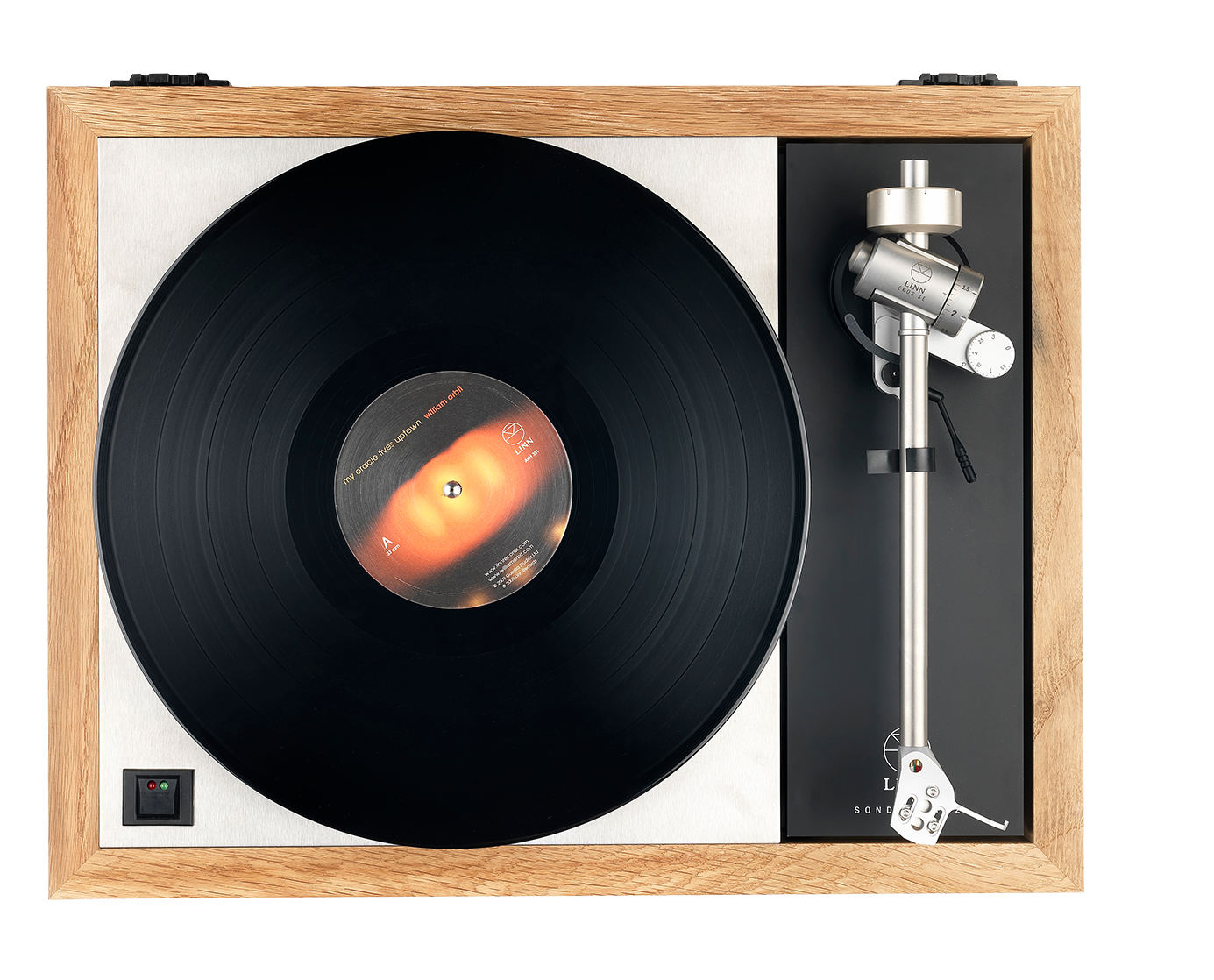
If your suspension system is designed correctly, then the fragile relationship between cartridge stylus and record groove will be less vulnerable to certain kinds of interference; additionally, the soft drive belt may indeed filter out some of the noise generated by the motor. But any system that's free to rotate in relation to the rest of the world, and to an energy source such as an electric motor, will do just that: Torsional modes will be set up, and the subchassis will attempt to rotate about its own center. If the center of the suspension happens to coincide with the platter bearing—as is the case with most such record players—you'll be left with a slight, continual twisting movement between the platter on one hand and the tonearm and cartridge on the other, resulting in a slight, continual modulation of the signal. And that ain't good.

I never gave any of that a thought until 1985, when an engineering-school graduate named Touraj Moghaddam introduced the first Roksan Xerxes turntable to the audio world. Moghaddam understood the problem and addressed it in two distinct ways. First, because he regarded groove drag as among the causes of the torsional modes described above, Moghaddam gave the motor casing its own bearing and restricted its long-range movement with a sprung tether, so that the revolving armature could still drive the system. Brief, momentary increases in drag were thus absorbed by the motor itself, and changes in platter acceleration were mitigated. Second, Moghaddam devised a turntable suspension that was less free to move in the lateral plane than most, thus restricting the rotation of the suspended parts relative to the motor.
An interesting side note: Some Linn aficionados think that the stringent requirements for adjusting and clamping the LP12's tonearm cable might accomplish the same thing. A properly dressed cable allows the suspension to bounce nicely up and down, but restricts its ability to rotate in one direction or the other. Makes sense.
As it turns out, Roksan wasn't the only company to notice the problem—or offer a solution. In the 1980s, Pink Triangle designer Arthur Khoubesserian created a lightly sprung turntable in which the center of the suspension and the platter bearing were separated by a considerable distance—mitigating the relative movement between tonearm and platter, and preventing the phase modulation of the signal, as he described it.

Then, in the mid-1990s, for Pink Triangle's Anniversary turntable, Khoubesserian went a step further: He put the motor right on the subchassis, leaving, as the only links between his turntable's working parts and the rest of the universe, the three suspension springs and an intentionally delicate signal connection. Which was almost the same as having no links at all.
The motor in the Pink Triangle Anniversary was a relatively small, lightweight DC type, said to be freer from unwanted vibrations than most. Still, no motor is perfectly silent, so Khoubesserian used three soft rubber bushings to decouple it from the Anniversary's honeycombed subchassis. Further, in keeping with the Pink Triangle design theory that I described in last month's column, Khoubesserian placed the motor between and in line with the main bearing and the tonearm pivot—at the 2 o'clock position, viewed from above. (For you latecomers: Having the motor in either the left-front or right-rear position puts the drive belt more or less in line with rather than perpendicular to the cantilever of the phono cartridge, so that the motor will contribute the least possible amount of vibration to the signal output.)
Whether for those or some other reasons, Pink Triangle's Anniversary remains among the four or five turntables that have most impressed me over the years, and I was sorry when the company went out of business. But now that Arthur Khoubesserian has returned to the hi-fi world with a new company, The Funk Firm, one might wonder how many of the Anniversary's design distinctions have survived from that life to this. The answer: almost all of them.
Wow is a noun
At least in a functional sense, the new Funk Firm Vector turntable ($1449 without tonearm) and its less expensive brother, the Funk ($859 without arm), both resemble a Pink Triangle Anniversary subchassis—albeit one that has been distended in one direction and perched on three feet rather than hung from a frame-type plinth. Both players are distinctively spare, low-mass designs, and both use DC motors, compliantly mounted in line with the platter bearing and tonearm pivot.

In addition to those products, Arthur Khoubesserian designs and manufactures modification kits for certain Pink Triangle turntable models, and for the Linn Sondek LP12—the latter being the focus of my attention. The Funk Firm offers two levels of LP12 modification kits: Stage 1, called Funk Link ($1599), combines the carbon-fiber top plate I described last month, plus an ironless-rotor DC motor and an outboard power supply for same; Stage 2, the Vector Link ($1859), adds an upgraded DC motor, an upgraded power-supply PCB, and an entirely new subchassis, plus various interesting bits and pieces to facilitate installation. The Vector Link also includes a light, semirigid platter mat, the Achromat, which is available as a separate accessory for $100.
If you buy both kits at once, you get a nice break of $299 on the price (for $3159 total), and two of the elements described above are combined into one: The motor comes premounted to the subchassis, with a specially made wooden motor plate and three metal-and-rubber “bumpers” of the sort used to fasten together different segments of an Alfa-Romeo driveshaft, albeit on a different scale (footnote 1). And that’s how my review samples of the motor and subchassis were supplied: together.
Moreover, the subchassis came fitted with Stage 2’s Vector Drive: a mechanical system comprising two 1"-long axles bolted to the subchassis from beneath, and two molded pulleys designed to ride those axles once they’ve poked their way up through the openings made for them in the Funk Firm top plate. Used with the kit’s own belt, those idler pulleys combine with the motor pulley to form a three-point drive intended to prevent wobbling in the platter bearing—and thus the noise and unwanted movement that may well result.
My original plan was to try the different Funk Firm modifications in an incremental fashion. But in light of all the above, after installing the carbon-fiber top, I couldn’t see a practical alternative to skipping directly to The Big Finish.
Back into the setup jig went the cherry LP12. I stripped it to the plinth once again, then removed the platter bearing from the stock Linn subchassis. (No, I couldn’t find the red rubber cap meant to seal the bearing well; yes, I spilled some of the oil; yes, I was wearing off-white trousers at the time. Much hilarity ensued.) The Vector Link kit came with a nice set of machined aluminum rings that are adaptable to either Linn’s Cirkus or pre-Cirkus bearings, and are intended to safely and evenly distribute the torque of the mounting bolts. The remarkably light subchassis combines a balsa core with upper and lower layers of carbon fiber: tough stuff—but I was nonetheless careful not to damage it by making those bolts too tight. The old Linn suspension springs and rubber grommets fit the subchassis well—at some points of contact, the Funk subchassis is deliberately milled down to just the upper layer of carbon fiber—and, thanks largely to the fact that all of the parts were well finished and made to fit precisely, the whole job took less than an hour.

With the new mechanicals installed—and the wires for the new DC motor properly dressed, clamped, and emerging like a caddisworm from the plinth—I repositioned the LP12 on my Mana table and connected the Funk Firm K-Drive power-supply unit: a DC source that uses a current-feedback servo system to control the kit’s low-inertia motor, for the ultimate in speed stability. The front panel of the K-Drive PSU sports a three-position rotary switch, plus two speed-adjustment screws, one each for 33.3 and 45rpm.
The performance of the LP12 with the full Funk kit was nothing short of brilliant. Musical timing, freedom from pitch uncertainties, and overall emotional effectiveness were at least the equals of those of any other source component I’ve had at home, and the sonic presentation was wonderfully open and clean. Interestingly—make of this what you will—the tonal balance of the Funked Linn was closer to my recollection of the Pink Triangle Anniversary than that of the LP12 itself. Well-loved recordings seemed clearer and more transparent than ever, as if lit from within. And while I freely admit that the change caught me off guard, and even today I’m still not sure how the small, frightened, woodland-animal part of my brain really feels about it, the LP12’s upper-bass emphasis and warmth were gone. Completely.

What’s more, my LP12’s ability to suggest a spatial dimension to the sound of two-channel stereo recordings—to portray, howsoever fancifully, the locations of various musicians within that space—got a real shot in the arm. The end result was a turntable that did a good job with both the music and the sound, not unlike that fondly remembered Anniversary. Nothing wrong with that!
It was the sort of change I’d expect to hear from an entirely new and entirely superior record deck. The Byrds’ “Here Without You,” from Mr. Tambourine Man (in this instance, the superb Sundazed reissue of Columbia LP 5057), sounded startlingly clear, open, and musically involving. It was as if, in previous listenings, there had been some noise or interference going on in the background, like a headache I didn’t know I had until it went away. Suddenly, I was hearing only what was on the record. And the spatial aspect of the recording sounded impressively big and deep—much more so than I’d ever heard from this album.
Similarly, Chris Stamey’s endearingly offbeat recording of John Lennon’s “Instant Karma,” from his Instant Excitement EP (Coyote COY 007), was simply clearer with the full Vector Link, the guitar, electric keyboard, and drums all seeming to be played with more force. The spooky guitar chords on the next number, “When We’re Alone”—done here in an altogether nicer and more atmospheric way than the version that came out on 1987’s It’s Alright album—had more in the way of pitch stability, and a greater level of cool, clear listenability, than on any other LP12 incarnation.

I then went even further: I added the Funk Firm Achromat, which combines a light and porous polymer fill with two sides of rigid skin, to form a record support that’s intended to act as a nonreflective sink for the excess resonant energy thrown off by transduction. I’d actually tried the Achromat once before—with my still-unmodified LP12, when the Funk kit first arrived—and hadn’t really cared for it. But now, the Achromat’s strengths and those of the rest of the Funk kit seemed to pull in the same direction. With all the bits in place, it seemed as if one last impediment had been removed—and I could now hear virtually every aspect of the musical content, and the sonic presentation begin to jell.
Set up is a verb
Still, I was curious: How would my Linn LP12 sound with only the new top plate and the DC motor and supply—and without the new subchassis and Vector pulleys? What would I get from just the Stage 1 Funk Link mods? It wasn’t easy, but I think I’ve found out.
Assuming that no one would mind if I removed the Vector Link’s DC motor from its carbon-fiber subchassis—no parts were discarded or destroyed in the process—I went ahead and did just that. Then I fashioned a rigid motor mount out of a thin strip of metal, and installed the Funk Firm’s DC motor in my LP12 in such a way that its plastic pulley was just high enough to drive the subplatter without also causing the rubber belt to “hunt” up or down for the right position.
Ou
Coisa lindas esses Linn, principalmente o LP 12 com essa caixa de madeira, quando for pra Londres vou trazer um nem que for debaixo do braço, rs
LP12 é meu sonho de consumo.
O meu Axis já é um show e me serve com vantagens sobre o meu Rega.
Um LP12 custa uma grana mas vale cada centavo.
se puder trazer …traga .
Jamais se arrependerá
Abraço
[QUOTE username=Jose Ricardo userid=7347734 postid=1318515259]LP12 é meu sonho de consumo.
O meu Axis já é um show e me serve com vantagens sobre o meu Rega.
Um LP12 custa uma grana mas vale cada centavo.
se puder trazer …traga .
Jamais se arrependerá
Abraço [/QUOTE]
Tive oportunidade de ouvir com todos os upgrades possíveis! Foi em Copacabana com o Ricardo Simas, colega nosso do extinto HTforum, hoje ele voltou morar fora, EUA, ainda conversarmos! Gostei muito do LP12?
Ricsimas era um grande companheiro no HT Forum. Ainda tenho em uso comigo sua capsula ZU DL 103MKII (nº de serie 0077 - famosa ate mesmo no Pinterest) e seu pre de phono da Rega , o MC Rega . Seu Linn com o braço Naim era realmente um show . ?
Tambem não posso tocar no fato das dicas que Ricsimas me passou sobre seu grande conhecimento dos toca discos Linn , que inclusive me levaram a escolher minha capsula e me proporcionou o contato com a Cymbiosis onde eu comprei meu braço Ittok para meu Axis , alem de outros acessorios , como oleo da Linn, matt e cabo .?
Meus caros, admito uma feliz surpresa quando entrei pela primeira vez nesse novo fórum agora e vi esse tópico com tantos grandes nomes do HTF!
Estou prestes fazer parte deste Clube, recomendado e trazido pelo próprio @Ricsimas.
Já ouvi a LP12 dele algumas vezes, menos do que gostaria, mas o suficiente para saber que se trata de um aparelho incrível.